

Introduction
The origin of the African swine fever (ASF) outbreak in Catalonia at the end of November 2025 has marked a milestone in the recent history of the Spanish pig sector.
African swine fever (ASF) is a highly contagious viral disease caused by aAsfivirusof the genreAsfiviruswhich exclusively affectsdomestic and wild pigs(wild boars). AlthoughIt is not zoonotic(It is not transmitted to humans), its health, production and economic impact on the swine sector is extremely severe due to its high mortality rate and the absence of vaccines or approved curative treatment
After more than three decades without the presence of the virus, the confirmation of positive cases in wild boars in peri-urban areas of Catalonia (rising to 26), more specifically in the province of Barcelona, has activated all health alert protocols, generating concern both for the health consequences and for its economic and commercial impact.
Spain is one of the leading pork producers in Europe and the world, with a well-established production chain and international markets that depend on the perception of animal health safety. The reappearance of African swine fever (ASF) is testing both prevention systems and the economic resilience of the sector, and requires intervention from the Ministry of Agriculture, Livestock and Fisheries (MAPA).
We analyze the current health situation, the hypotheses about the route of introduction of the virus, and the economic impact at the level of farms, industry and foreign trade.
Characteristics of the virus and susceptible animals
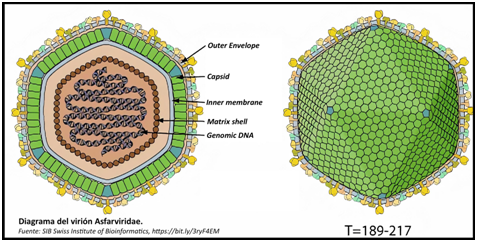
ASF is caused by the African swine fever virus (ASFV), a DNA virus of the familyAsfarviridae, gender AsfivirusIt is a highly resistant virus, capable of surviving for long periods in meat and meat products, as well as in the environment, which facilitates its indirect transmission. It is not zoonotic; that is, it does not affect humans, but it has a devastating impact on domestic pigs and wild boar.
ASFV primarily infectsdomestic pigs and wild boars,Although it can also affect other wild swine. Infection occurs through direct contact with infected animals, via secretions and excretions (saliva, urine, feces), by ingesting contaminated meat products, or by contact with contaminated objects, equipment, or clothing (fomites). Its incubation period varies from 5 to 15 days, depending on the strain, the infectious dose, and the route of exposure.
The virus causes highly variable clinical forms, ranging from acute infections with near 100% mortality to subacute or chronic forms with less evident signs. The most frequent clinical signs include high fever, lethargy, anorexia, skin hemorrhages, respiratory distress, abortions in pregnant sows, and rapid mortality. Its high virulence and the lack of effective vaccines mean that prevention and control depend almost exclusively on biosecurity and health management.
Timeline of the outbreak in Catalonia
Initial virus detection
- Late November 2025The first positive cases of ASF in Spain since 1994 were confirmed in two dead wild boars in Bellaterra (municipality of Cerdanyola del Vallès, Barcelona) at the end of November.
Increase in cases and expansion of the focus
- Since then, the Spanish Veterinary Health Authority (through the Ministry of Agriculture, Fisheries and Food) has continued its thorough investigation of wild boar carcasses in the affected area to determine the origin of the virus. As a result, the number of wild boar with confirmed African swine fever (ASF) has steadily increased, reaching at least 26 positive cases within the initial detection area.
Situation of commercial pig farming
- To date, the virus has not been confirmed on any commercial pig farms, either within the high-risk area (20 km radius of the initial outbreak) or outside of it. Tests carried out on more than 55 nearby farms have come back negative, which is a relative relief, although the pressure on wildlife remains a latent risk.
Evolution of the current outbreak.
The confirmed cases have been limited to wild boar in a specific area of Catalonia. Health authorities, in coordination with the European Commission, have established restricted zones and are implementing measures to control the movement of animals and products, active surveillance, and systematic removal of carcasses.
The Ministry of Agriculture, Fisheries and Food (MAPA) has deployed a system of enhanced inspections and diagnostic sampling on farms located both inside and outside the affected area. The combination of passive surveillance (carcass inspection) and active surveillance (sampling of wild animals) allows for comprehensive monitoring of the virus. Protocols include blood and tissue sampling, serological and molecular analysis, and continuous monitoring of wild boar mortality.
Managing this outbreak requires a comprehensive approach:Sanitary control, biosecurity on farms, transparent communication and international coordination, especially in exportsEarly detection has helped limit the geographical spread of the virus, but uncertainty about the route of introduction keeps the entire sector on alert.
Epidemiological investigation: analysis of the virus introduction route
Classical hypotheses initially considered
In the initial phases, authorities assessed the most common routes of introduction. Transmission via vehicles contaminated with organic material or remnants of infected products is a classic mechanism, especially in areas with intensive livestock operations. The possibility of the virus entering through contaminated food, food scraps, or the accidental transport of wildlife from infected areas in other European countries was also considered.
However, as data was collected, these hypotheses lost credibility. No logistical routes were identified connecting Catalonia with recent outbreaks of African swine fever (ASF) in Europe, nor were any significant breaches detected in animal or feed transport controls. The location of the outbreak, in a peri-urban area with a high human population density and scientific activity, also does not fit a pattern of introduction by migratory fauna or through natural corridors, which are usually found in more isolated rural areas.
Although indirect transmission cannot be completely ruled out, initial analyses suggest that there is no solid evidence to attribute the introduction of the virus to this route.
Introduction hypothesis linked to laboratory activities
The hypothesis that has gained the most traction in the investigation is the possible accidental introduction of the virus in laboratories, especially the IRTA (Institute of Agrifood Research and Technology) and other animal health research facilities near the first cases. This line of inquiry is based on several technical elements that make it epidemiologically plausible.
First, thelocation of the focusThe detection of infected wild boar in peri-urban areas with high human and scientific population density is atypical for African swine fever (ASF) outbreaks resulting from natural spread from Europe. This isolated occurrence suggests a single introduction rather than progressive dissemination.
Second, thegenomic resultsof the virus. Sequencing has shown that the strain does not fully match recent European variants, suggesting an independent introduction rather than an outbreak stemming from normal circulation within the European Union. This finding has reinforced the focus on a possible link to biological material handled in laboratories.
Third, thelack of clear alternative routesThe lack of evidence regarding the transport of animals, contaminated products, or migratory fauna reduces the likelihood of classic introduction routes and makes the hypothesis of an accidental event linked to human manipulation more relevant.
It is important to emphasize that research centers, such as IRTA, operate under strict biosafety protocols and have highly qualified personnel. However, international experience shows that human or technical errors can occur, such as mistakes in waste management, incidents during equipment decontamination, or problems in the internal transport of biological material. These events, although rare, are sufficient to consider the accidental introduction of the virus plausible.
As of today,There is no conclusive evidence implicating a specific laboratory.This is a working hypothesis that is being thoroughly investigated by the authorities, with the aim of improving biosecurity and preventing future incidents.
Economic impact of the outbreak
Market prices and farm profitability
Before the outbreak, prices at the main fish markets were around1.30 €/kg live weighta tight but sufficient level to cover production costs on most farms. After the outbreak was detected, prices fell sharply, settling between1.05 and 1.10 €/kg liveThis drop, exceeding 15%, places many farmers below the profitability threshold.
Production costs, including feed, energy, facility maintenance, and labor, exceed €1.20/kg live weight on many farms, resulting in direct losses per animal produced. Furthermore, liquidity pressures are increasing due to the need to strengthen biosecurity measures and comply with additional health requirements.
Direct and indirect costs
The outbreak has generated additional costs on several fronts:
- Enhanced biosecurity measures: cleaning and disinfection of facilities, access control, waste management and personal protective equipment.
- Losses from unsold or delayed production: animals that remain on the farm longer due to transport restrictions or logistical problems.
- Impact on the manufacturing industry: reduction in sacrifices and production, product accumulation, partial plant shutdowns, increased operating costs.
- Costs associated with foreign trade: delays and restrictions in exports, need for additional certification, possible tariffs or temporary loss of markets.
Preliminary calculations estimateweekly economic losses in the tens of millions of euros for the entire chain, from producers to exporters, depending on the duration of the restrictions and the geographical scope of the outbreak.
Impact on exports and international markets
Spain exports a significant portion of its pork production, with Asia being the main destination. Following the outbreak, China implemented regionalization, allowing imports from African swine fever-free zones outside the affected area in Catalonia. South Korea has followed a similar approach, reopening its market under enhanced certifications.
Other Asian countries, such as Japan, maintain restrictions, while the United Kingdom is negotiating a gradual reopening based on regional criteria and the recognition of free zones. Market recovery will depend on the effectiveness of health controls, transparency in research, and international confidence in biosafety systems.
Medium and long-term consequences
If control and regionalization measures are implemented correctly, it is possible to stabilize prices and recover markets. However, economic pressure on livestock farmers and the industry will remain high until the outbreak is fully contained. Transparency in the investigation into the route of introduction, including the laboratory hypothesis, is essential to maintaining the confidence of the sector and trading partners.
Conclusion
The African swine fever (ASF) outbreak in Catalonia presents a health, economic, and reputational challenge. Although it remains limited to wildlife, its repercussions have been immediate: falling prices at livestock markets, increased costs, tensions within the industry, and international restrictions. The investigation into the route of introduction, including the hypothesis of a laboratory-linked origin, must be conducted rigorously and transparently. At the same time, it is essential to strengthen biosecurity, support the sector in its economic recovery, and maintain the confidence of international markets. With proper management, Spain can overcome this episode without compromising its leading position in the pork sector at the European and global levels.
PPA Frequently Asked Questions
What is African Swine Fever and what animals does it affect?
African swine fever (ASF) is a highly contagious viral disease caused by the ASFV virus, primarily affecting domestic pigs and wild boar populations. It is not zoonotic, meaning it does not affect humans. It can cause near 100% mortality in acute infections.
How is the virus transmitted?
The virus is transmitted through direct contact with infected animals, secretions or excretions, ingestion of contaminated meat, or contact with contaminated objects (fomites). It can also persist for a long time in meat products or organic waste.
Are there vaccines available to prevent ASF?
Currently, there is no commercially effective vaccine for African swine fever (ASF). Prevention relies on strict biosecurity, movement control, health surveillance, and culling of infected animals.
What is the current situation of the outbreak in Catalonia?
To date, confirmed cases are limited to wild boar in a specific area of Catalonia. The disease has not been detected in commercial pig farms, and movement control measures and active surveillance are in place.
What hypotheses are being considered about how the virus arrived in Catalonia?
Traditional routes of introduction, such as the transport of contaminated vehicles or products, are largely ruled out. One relevant hypothesis is accidental introduction linked to laboratory activities in the IRTA area, although this is still under investigation and there is no conclusive evidence.
What economic impact has the outbreak had?
The outbreak has led to a drop in wholesale prices (from €1.30/kg live weight to €1.05–€1.10/kg), increased biosecurity costs, and losses in the processing industry and exports. The economic pressure extends from livestock farmers to processors and exporters.
How does this affect exports and international markets?
Some countries, such as China and South Korea, allow imports from Swine Fever-free zones through regionalization. Others maintain partial restrictions. The United Kingdom is negotiating a reopening based on Swine Fever-free zone criteria.
What measures should farmers take?
Maintain strict biosecurity on farms, control access and equipment, avoid contact with wildlife, comply with official guidelines and report any suspicious signs of disease to prevent the emergence of new positive cases of African swine fever.


 Ambiotec Solutions