

Multidisciplinary analysis of heat stress, bedding degradation, and associated pathological challenges in livestock
The extreme weather variations recorded in the Iberian Peninsula so far in 2026 have introduced critical disruptions to the operational and health management of livestock farms. The wet and warm winter, followed by an exceptionally warm and unusually dry April, has altered environmental pathogenicity patterns and accelerated the Heat stress in cows and other production ruminants. The analysis of these meteorological anomalies and their direct repercussions—such as manure decomposition, Bovine Respiratory Syndrome, coccidiosis sporulation and the associated pathophysiological alterations—situations with risk of heat stress— highlights the urgency of strategically adopting precision measures.
1. Characterization of the 2026 climate anomaly in Spain: temperature and humidity indices
The 2026 climate season in Spain is marked by significant instability and alternating extreme weather events in terms of temperature and humidity:
- Very warm and very humid winter (December to February): According to the AEMET (Spanish State Meteorological Agency) report, “The winter of 2025-26… was very warm. In peninsular Spain, the average temperature was 7.6 °C, which is 1.0 °C above the average,” making it the “ninth warmest winter since records began in 1961 and the sixth warmest of the 21st century.” Rainfall was “very wet… with an average precipitation of 323.2 mm (171% of the normal value),” while the January-February period was “the wettest in the last 47 years.” In Extremadura, the winter was “very wet… reaching 447.2 liters per square meter (a surplus of 286%),” with an average of “9.4 °C (0.8 °C above average), making it the seventh warmest winter” in its recorded history.
- Extremely warm spring (April): Thermal instability worsened in spring. AEMET (the Spanish State Meteorological Agency) confirms that “April 2026 registered an average temperature of 15.1 °C in peninsular Spain, exceeding the average temperature for April by 3.2 °C… It was an extremely warm month” and “the warmest April since records began in 1961.” Furthermore, rainfall “reached only 58% of its normal value,” resulting in a very dry month.
2. Dynamics of wet bedding, Ovine Respiratory Syndrome and parasitic enteritis.
The extreme rainfall of the winter of 2026 saturated the environments surrounding livestock housing. With high humidity outside, the evaporation rate inside the buildings decreased, preventing the manure from drying (animals eliminate 70-80% of the water they consume). This saturated the straw, accelerating its bacterial decomposition. Faced with this water accumulation, the inefficiency of the ventilation systems aggravated the accumulation of gases and moisture.
This degradation of the organic bedding triggers a two-way health conflict:
Ammonia release and Bovine Respiratory Syndrome (BRS): Humidity catalyzes the decomposition of urea, releasing ammonia (NH3). Concentrations above 20-50 ppm irritate the mucous membranes and destroy the bronchial cilia of calves. Without mucociliary clearance, the respiratory system is left unprotected against opportunistic pathogens. In growing and fattening calves, this damage, combined with heat stress from fluctuations upon entering the feedlot, triggers Bovine Respiratory Syndrome (BRS). Viruses and bacteria act synergistically, causing pneumonia and pleuritis.
Acceleration of coccidiosis and cryptosporidiosis: Mild winter temperatures and humid beds optimize rapid oocyst sporulation (ideal between 18-27ºC).
- Bovine coccidiosis (Eimeria bovis and Eimeria zuernii): It affects calves from 3 weeks to 6 months old. After ingesting oocysts from the environment, they damage intestinal cells, causing hemorrhagic diarrhea, severe dehydration, systemic metabolic acidosis due to bicarbonate loss and arrhythmias due to potassium loss.
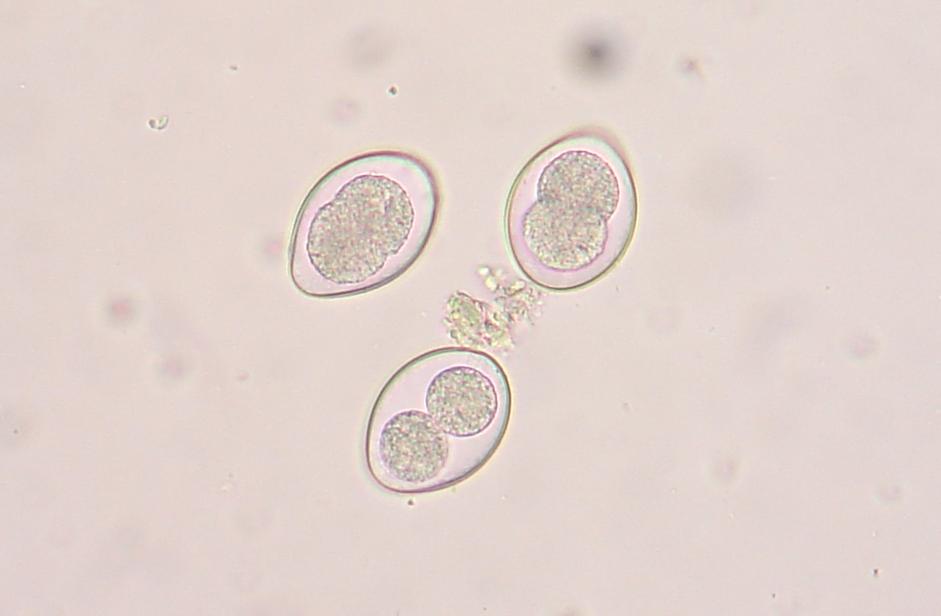
- Criptosporidiosis (Cryptosporidium minor): Common zoonotic disease in calves aged 2 to 3 weeks. The molecular prevalence of Cryptosporidium spp. It reaches 51.7% in calves and 31.7% in carrier cows in Spain, highlighting C. parvum. In kids, the molecular prevalence reaches 25% (Cryptosporidium xiaoi).

3. Pathophysiology of heat stress in livestock
The effects of heat stress on ruminant physiology manifest acutely when the animal accumulates more body heat which it is capable of releasing through physical mechanisms of heat transfer (radiation, conduction, convection, and evaporation). This inability to heat dissipation triggers a severe thermoregulatory cascade, especially in hot extreme situations. The thermal stress can profoundly alter the animal’s homeostasis. In the case of heat stress in dairy cows for high-production systems, the comfort threshold is set at a temperature and humidity index (THI) of 68. This index combines, in a simplified way, the ambient temperature and humidity to evaluate the environment and relative humidity with regard to animal comfort.
When this limit is exceeded, the heat stress in cattle It causes three critical systemic alterations:
- Hyperventilation and ruminal acidity: To favor the heat dissipation and reduce body temperature the animal begins to increase its respiratory rate. This hyperventilation clears alveolar carbon dioxide. As compensation, the kidneys eliminate bicarbonate in the urine, reducing its concentration in saliva (a natural buffer). With decreased saliva and rumination, the rumen rapidly acidifies, potentially leading to Subacute Ruminal Acidosis (SARA).

- Circulatory redistribution and intestinal inflammation: To favor the heat loss peripheral blood flow is diverted to the skin, causing ischemia in the stomach and intestines. The lack of blood flow damages the tight junctions of the intestinal barrier, making it permeable (leaky gut). This can allow endotoxins and bacteria to enter the bloodstream, weakening immunity and causing inflammation.
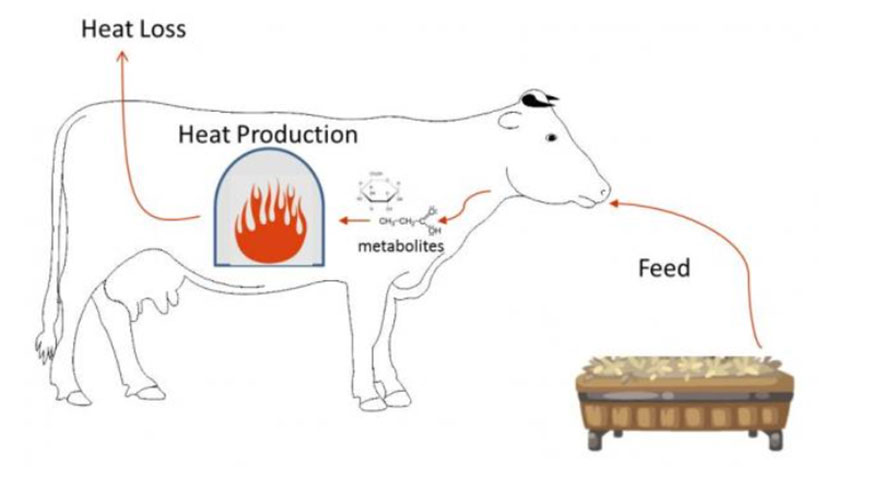
- Alteration of energy balance and productive performance: Because fiber digestion generates a high amount of ruminal fermentation heat, the thermal stress reduces voluntary dry matter intake. This reduction in intake of food combined with the energy expenditure required to dissipate body heat, diverts essential nutrients that would otherwise be used for animal production. As a result, the impact of heat stress can cause in dairy cattle a lower milk production, decreases cow fertility and results in weaker offspring with lower birth weight. Stressed cows chronic cases show prolonged immune and metabolic depression.
4. Precision nutrition solutions: The AMBiotec catalog
Mitigating the consequences of climate change by 2026 requires an integrated, preventative approach that combines environmental management with the strategic use of AMBiotec’s precision nutrition solutions. Mitigating heat stress successfully in hot seasons and safeguarding the cows’ welfare is essential to complement physical technologies (such as shade structures or cooling systems) with nutritional modulators that act from the physiological level.
These animal feed products provide safe physiological and nutritional support for combat stress and safeguard the livestock health guaranteeing digestive safety and local immunity against negative effects of extreme variations.
To help calves and small ruminants maintain proper digestive balance during wet periods or periods of high environmental contamination in bedding. AMBiotec offers natural-based solutions that facilitate stress management physiological:
- Neonatal Support and Digestive Wellbeing: The use of Cryptomilk provides natural extracts and nutrients that promote the firmness of stools, support the integrity of the intestinal mucosa and strengthen the newborn’s defenses against environmental hygiene challenges.
- Comfortable Artificial Feeding: Bilantul Milk is integrated into infant milk to promote the correct balance of the infant’s intestinal flora, facilitating optimal assimilation of fats and proteins and helping the animal to tolerate the challenges of common digestive parasites such as coccidia and cryptosporidia.
- Phytobiotics in Rearing and Fattening: Bilantul Rum is a complementary feed based on selected essential oils and botanical extracts that helps maintain a balanced microbiota in the rumen and intestine, reducing the risk of disorders associated with rapid transit, acidosis or bloat.
- Block Collective Support: Cocciblock and the range Cocci Cero and Cocci Cero Macro allow the provision of nutrients and phytobiotics that stimulate the natural resistance of the herd against parasites in mothers and collective groups in heat stress situations.
- Stabilization of Hydroelectrolytic Balance: Bilantul Rehidra is a soluble dietary supplement formulated for electrolyte balance. Its salt content quickly counteracts dehydration and stimulates the body water consumption allowing the replenishment of essential minerals (sodium, potassium and magnesium) lost through sweating and panting under heat stress, stabilizing well-being and consumption.
5. Conclusions: climatic conditions and their effects on livestock
The extreme weather fluctuations recorded in the Iberian Peninsula so far in 2026 confirm that meteorological instability represents an unavoidable structural challenge for the livestock sector. The sudden transition from winter moisture saturation to record-breaking spring temperature anomalies severely compromises ruminant homeostasis, inducing critical heat stress, ruminal acidosis, and a worrying immune vulnerability. In this scenario of high environmental pathological pressure, the incorporation of precision feeding and rehydration strategies, such as AMBiotec’s specialized range, proves to be a fundamental pillar for stabilizing digestive physiology, restoring electrolyte balance, and ensuring productive resilience and animal welfare on Spanish farms.


 Ambiotec Solutions